
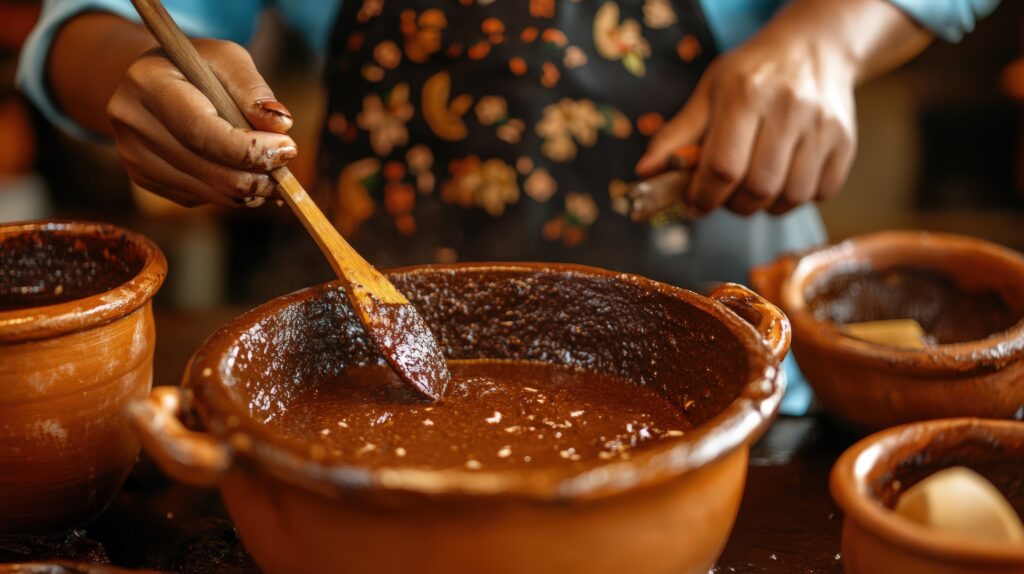
If you’ve heard of mole and think it’s some kind of Mexican chocolate sauce, you’re not alone. This is one of the most common misconceptions about Mexico’s most celebrated culinary creation. The truth is far more fascinating: mole is an ancient, extraordinarily complex sauce that represents centuries of culinary tradition, cultural fusion, and the kind of patience that modern cooking has largely forgotten.
Let’s unravel the mystery of mole, explore why authentic versions contain anywhere from 20 to 36 ingredients, and discover what makes this dish so special from different regions that it’s considered one of Mexico’s national treasures.
What is Mole?
Mole (pronounced “MOH-leh”) is a rich, thick Mexican sauce traditionally served over meat, most commonly chicken or turkey. The word comes from the Nahuatl term “mōlli,” which simply means “sauce” or “mixture.” This linguistic origin hints at mole’s deep roots in Mexican history, stretching back to pre-Hispanic times when the Aztecs created complex chile-based sauces.
But mole isn’t just one recipe. It’s an entire category of sauces found throughout Mexico, with each region claiming its own variations. The most famous version is mole poblano from the state of Puebla, recognizable by its dark reddish-brown color and complex flavor profile that balances earthy, smoky, sweet, and spicy notes into something entirely unique.
Here’s what mole is NOT: it’s not a chocolate sauce, it’s not primarily sweet, and it’s not a quick weeknight dinner sauce. Authentic mole is a labor of love that can take anywhere from several hours to multiple days to prepare properly.
The Legend Behind Mole Poblano
Like many iconic dishes, mole poblano has an origin story that blurs the line between history and legend. The most famous tale places its creation in the 17th century at the Convent of Santa Rosa in Puebla, around 1685.
According to legend, a Dominican nun named Sor Andrea de la Asunción found herself in a panic when the archbishop made an unexpected visit. With little time and limited ingredients, she gathered everything available: various dried chiles, stale bread, nuts, spices, and a small piece of chocolate. She ground these ingredients together, cooked them into a sauce, and served it over turkey. The archbishop was reportedly so impressed that mole poblano became legendary.
While this story is charming, the reality is likely more complex. The Aztecs had been making chile-based sauces called “molli” long before the Spanish arrived. When Spanish colonizers brought ingredients like cinnamon, cloves, and almonds, these merged with indigenous ingredients like chocolate, tomatoes, and native chiles to create what we now know as mole poblano.
Whether born from panic or centuries of evolution, mole represents Mexico’s mestizaje: the beautiful blending of indigenous and European cultures into something entirely new.
The Seven Types of Mole
Before diving into why mole has so many ingredients, it’s worth understanding that mole poblano is just one star in a constellation of varieties. The state of Oaxaca alone claims seven distinct types:
Mole Negro (black mole) is the most complex, containing 30 or more ingredients. Its distinctive dark color comes from charred chiles and Mexican chocolate, creating a rich, smoky flavor.
Mole Rojo or Colorado (red mole) features ancho, pasilla, and chile de árbol, creating a brick-red sauce with chocolate and toasted sesame seeds.
Mole Coloradito is sweeter, incorporating plantains, raisins, and cinnamon for a reddish-brown sauce often served with pork.
Mole Amarillo (yellow mole) gets its bright color from chilhuacle amarillo chiles and tomatillos. It’s lighter and tangier than darker moles.
Mole Verde (green mole) is the lightest variety, built on pumpkin seeds, fresh tomatillos, cilantro, and fresh green chiles rather than dried ones.
Mole Manchamantel, meaning “tablecloth stainer,” includes pineapple and sweet plantains, creating a fruity, vibrant sauce.
Mole Chichilo is one of the rarest moles, featuring charred ingredients that give it a distinctive anise flavor.
Each type demonstrates the incredible diversity within the mole family, and each requires its own specific combination of ingredients and techniques.
Why Does Mole Have So Many Ingredients?
Now we arrive at the heart of the question: why does authentic mole poblano contain anywhere from 20 to 36 ingredients?
Balance and Complexity
Mole isn’t about making one flavor dominate. It’s about creating a symphony where every ingredient plays a specific role in building layers of flavor. Mexican culinary tradition recognizes that exceptional dishes balance multiple taste profiles: sweet, bitter, spicy, savory, smoky, and earthy.
Think of it this way: you could play a melody on a single instrument, or you could orchestrate it with strings, brass, percussion, and woodwinds. The latter creates depth and emotion that a solo performance cannot match. Mole works the same way.
Functional Roles
Beyond flavor, each ingredient serves practical purposes. Some provide heat, others add body and thickness, some contribute color, and many deliver umami. Nuts like almonds and peanuts create richness and help thicken the sauce. Dried fruits like raisins add natural sweetness. Seeds contribute both texture and flavor while helping bind everything together.
Cultural Fusion
The high ingredient count reflects mole’s history as a fusion cuisine. Indigenous ingredients like chocolate, tomatoes, native chiles, and pumpkin seeds combine with Spanish additions like cinnamon, cloves, almonds, and anise. Each culture contributed essential elements.
Labor as Love
The complexity of mole signals its cultural importance. In Mexican tradition, mole is made for celebrations: weddings, holidays, Día de Muertos. The time and effort required—sometimes two full days—demonstrates love, respect, and the significance of the occasion.
The 20-36 Ingredients of Mole Poblano
While the exact number varies by recipe, traditional mole poblano typically contains between 20 and 36 ingredients. Here’s how they break down:
Chiles form the foundation. Authentic mole poblano uses at least three types of dried chiles: ancho (sweet and mild), pasilla (earthy and complex), and mulato (smoky and slightly bitter). Some recipes add guajillo or chipotle for additional depth.
Spices and seeds add aromatic complexity. Mexican cinnamon, whole cloves, black peppercorns, anise seeds, coriander seeds, sesame seeds, and pumpkin seeds all appear in small amounts that add subtle background notes.
Nuts provide richness and body. Almonds and peanuts are toasted before being ground into the sauce, releasing their oils and adding luxurious mouthfeel.
Fruits and sweeteners balance the heat. Raisins add natural sweetness. Some recipes include plantain or banana. And yes, there’s chocolate—but only a small amount of unsweetened Mexican chocolate, which adds bitterness, richness, and color rather than sweetness.
Aromatics build the base. Onions, garlic, tomatoes, and sometimes tomatillos provide the savory foundation.
Thickeners give mole its signature texture. Stale tortillas or bread, toasted until dark, are ground into the sauce to create its characteristic thick consistency.
Fat and liquid bring it together. Lard or oil for frying, and chicken or vegetable stock for thinning the sauce to the right consistency.
When you total everything up, you quickly reach 25, 30, or even 36 distinct ingredients. And that’s the point: each one matters.
What Does Mole Actually Taste Like?
If you’ve never tried authentic mole, describing its flavor is challenging because it doesn’t taste like any single ingredient.
Mole is deeply savory with umami richness from the toasted nuts, seeds, and chiles. There’s an earthy quality from the dried chiles. You’ll notice subtle sweetness, but it’s not candy-sweet—it’s the natural sweetness of raisins and a hint of sugar, balanced by the bitterness of dark chocolate.
The spices add warmth and aromatic complexity without overwhelming the palate. The heat from the chiles is present but gentle—authentic mole poblano isn’t about scorching your mouth. It’s about a lingering warmth that complements the other flavors.
The texture is smooth and velvety. European diners might compare it to a deeply reduced wine sauce where multiple elements combine into something greater than their parts.
What mole definitely doesn’t taste like is hot chocolate. The chocolate is barely perceptible as a distinct flavor—it functions more like wine in French cooking, adding depth and tying other flavors together.
How Traditional Mole is Made
Understanding the preparation process helps explain why mole commands respect in Mexican cuisine.
Every single ingredient must be handled individually. Dried chiles are cleaned, stemmed, deseeded, and toasted on a hot comal. This toasting releases essential oils and deepens flavors, but burn them even slightly and the entire sauce becomes bitter.
Nuts and seeds are toasted separately. Spices are dry-roasted until fragrant. Onions, garlic, and tomatoes are charred until blackened. Bread or tortillas are toasted dark brown. Each ingredient follows specific techniques developed over generations.
Once prepared, everything is ground to a smooth paste. The paste is then fried in fat—this step “wakes up” the flavors. Stock is gradually added while stirring constantly, and the sauce simmers for hours. The cook must stir frequently to prevent burning.
The final sauce should be thick enough to coat a spoon, with a deep color and complex aroma. Many cooks insist that mole tastes even better the second day, after flavors have had time to marry.
At Sabor Sabor in Rotterdam, we prepare our mole using this traditional multi-day method, following recipes brought directly from Mexico City. It’s time-intensive work, but there’s no substitute for doing it properly.
The Magic of Mole
Mole is far more than a sauce. It’s a culinary philosophy that values complexity, balance, and patience. The 20 to 36 ingredients aren’t there for show—each one contributes to creating something that transcends its individual components.
Mole poblano holds a special place in Mexican identity. Along with chiles en nogada, it’s considered one of Mexico’s national dishes. It appears at life’s most important moments: weddings, quinceañeras, Día de Muertos celebrations, and Christmas. Family recipes are guarded carefully and passed down as treasured heirlooms.
The next time someone tells you mole is “just chocolate sauce,” you can set them straight. It’s an ancient tradition that fuses indigenous and European ingredients into Mexico’s most sophisticated dish. It’s hours or days of careful preparation. It’s the pride of entire regions. And it’s absolutely worth experiencing if you want to understand the depth and richness of Mexican cuisine.